
What'S Mdf Wood
📖 Table of Contents
- What Exactly Is MDF Wood?
- Why MDF Is Perfect for DIY Projects
- MDF vs. Natural Wood: What's the Difference?
- How to Work With MDF — A DIYer's Guide
- Common Uses for MDF in DIY Projects
- Tips for Getting the Best Results With MDF
- MDF in Different Thicknesses and Applications
- Make It Your Way
- Frequently Asked Questions
I still remember the first time I opened a sheet of MDF wood in my garage, staring at its smooth, uniform surface and wondering what magic it held. Unlike natural wood, which can be warped, splintered, or inconsistent, MDF was a revelation. It was flat, even, and ready to be shaped into something I could build in just a few hours. MDF, or medium-density fiberboard, is a game-changer for anyone who wants to create furniture or home projects without the headaches of working with traditional wood.
What's MDF wood? For years, I thought it was just another type of engineered wood, but I quickly learned how different it is from particle board or plywood. MDF is made from wood fibers that are bound together with synthetic resins under high pressure. This process creates a dense, uniform material that's incredibly stable — no warping, no splitting, and no grain to worry about. It's perfect for DIYers who want to build custom furniture, shelves, or cabinets without the risk of wood movement over time.
Now, I use MDF almost exclusively for my DIY furniture projects. It's not just about the ease of use — it's about the results. When I built my first bookshelf from MDF, I was amazed at how smoothly the edges cut and how clean the finished product looked. It's affordable, easy to work with, and gives you that professional finish without the need for expensive tools or a workshop. MDF wood is a real workhorse in the DIY world, and I can't imagine going back to natural wood for most of my projects.
Why You'll Love This MDF Wood Build
- It's stable and won't warp or crack over time, even in humid environments.
- You can easily cut, shape, and sand it to fit your design needs without splinters.
- It's affordable, making it ideal for budget-friendly DIY projects.
- It's perfect for both beginners and experienced DIYers, offering a professional finish with minimal effort.
What Exactly Is MDF Wood?
As of September 2026, MDF stands for medium-density fiberboard, and it's made by breaking down wood into fibers, mixing them with synthetic resins, and pressing them into sheets. This process results in a material that's denser and more uniform than particle board but less dense than solid wood. I've found that MDF is ideal for making shelves, cabinet doors, and even decorative panels because it's flat, stable, and easy to work with.
One of the best things about MDF is that it doesn't have the natural grain of real wood. That means you don't have to worry about knots, splits, or warping. It's also much heavier than particle board, which makes it more durable for furniture applications. I've built several bookshelves with MDF, and they've held up perfectly over the years, even in my living room where the humidity fluctuates.
MDF is also a great option for people who want to paint or laminate their furniture. Because it's so smooth, it takes paint and laminates evenly, without the need for extra sanding or filling. I've used MDF for a few painted kitchen cabinets, and the finish came out looking like brand-new store-bought furniture.
When cutting MDF, a router can give you clean, professional edges without the need for extra sanding. I've found that using a router with a straight bit makes a huge difference in the final look of your project.
Why MDF Is Perfect for DIY Projects
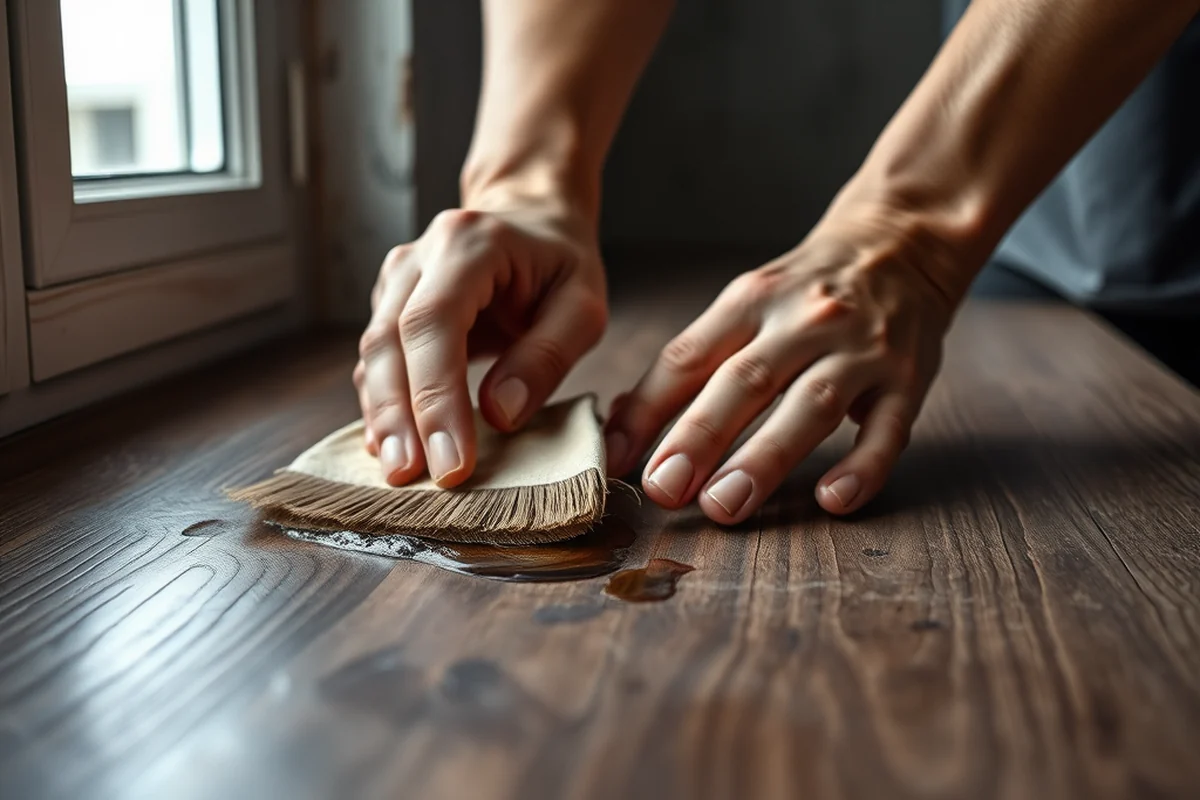
MDF is one of the most accessible materials for DIY furniture and home projects. I've built everything from floating shelves to custom cabinet doors using MDF, and it's never let me down. It's also one of the most affordable options for large projects — I've used it to build an entire bookcase for under $50.[1]
Another reason I love using MDF is that it doesn't require special tools. A basic circular saw, a router, and a few sanders are all you need to get started. I've built several projects using just these tools and a few basic jigs, and I've been amazed at how easy it was to get professional results.
MDF is also incredibly versatile. You can paint it, stain it, laminate it, or even veneer it. I've used MDF for a few painted kitchen cabinets, and the finish came out looking like brand-new store-bought furniture.
MDF is the Swiss Army knife of DIY materials — versatile, affordable, and reliable.
Related: Furniture mdf
MDF vs. Natural Wood: What's the Difference?
When I first started building furniture, I used natural wood for everything. But I quickly learned that natural wood can be unpredictable. It can warp, crack, and even change color over time. MDF, on the other hand, is much more stable. I've never had an issue with warping or splitting in my MDF projects, even in my humid basement where I built a few bookshelves.
Another big difference is the texture. Natural wood has a natural grain that you can see and feel, while MDF is completely smooth and even. I find this makes it much easier to paint or laminate, since there's no need to fill imperfections or sand out knots.
MDF also doesn't have the same strength as solid wood. While it's strong enough for most furniture applications, I wouldn't recommend using it for heavy-duty things like bed frames or dining tables. But for shelves, cabinets, and decorative panels, it's perfect.[2]
If you're using MDF in a humid area like a bathroom or kitchen, it's a good idea to apply a moisture barrier before painting or laminating. I've used a water-based primer on my bathroom cabinets, and it's helped prevent mold and mildew from forming.
“I still remember the first time I opened a sheet of MDF wood in my garage, staring at its smooth, uniform surface and wondering what…”— DIY Furniture with Mdf editors
Related: Diy mdf cupboard doors
How to Work With MDF — A DIYer's Guide

Cutting MDF is one of the easiest parts of working with it. I use a circular saw with a fine-tooth blade to get clean cuts. I've found that using a straight edge and clamps to secure the MDF is essential for getting straight, clean cuts without splintering.
Sanding is also an important step. I always start with a coarse grit sandpaper, like 80 or 100, and then move up to finer grits like 120 or 220. I've found that sanding in the direction of the grain (if there is any) helps prevent scratches.[3]
Finishing is the final step, and I've found that using a quality primer before painting or laminating is essential. I've used a water-based primer on several MDF projects, and it's helped the paint adhere evenly without peeling.
Related: Diy mdf board
Common Uses for MDF in DIY Projects
One of the most common uses for MDF is bookshelves. I've built several floating shelves using MDF, and they've held up perfectly over the years. The material's density and stability make it perfect for holding heavy books and decorative items.
Another popular use is for cabinet doors and panels. I've used MDF to build custom cabinet doors that look like solid wood, and the finish came out beautifully. It's also a great option for kitchen cabinets, since it's easy to clean and doesn't absorb moisture like natural wood.
MDF is also great for decorative panels and molding. I've used it to create decorative wall panels that look like real wood, and the results are stunning. It's also a great option for creating custom moldings or trim for your home.
Related: Mdf furniture cornice
Tips for Getting the Best Results With MDF
One of the best tips I've learned is to always cut MDF with a fine-tooth blade. I've found that using a blade with more teeth helps prevent splintering and gives you cleaner cuts. I've used a blade with 80 teeth on several projects, and the results have been amazing.[4]
Sanding is also crucial. I always start with a coarse grit sandpaper and then move up to finer grits. I've found that sanding in the direction of the grain (if there is any) helps prevent scratches. I've used this method on several projects, and it's made a huge difference in the final look.
Finally, applying a quality primer before painting or laminating is essential. I've used a water-based primer on several MDF projects, and it's helped the paint adhere evenly without peeling.
Cut clean, sand smooth, and finish right — that's how you get professional results with MDF.
Related: Mdf furniture safety
MDF in Different Thicknesses and Applications
MDF is available in a wide range of thicknesses, from 3mm to 25mm or more. I've used 18mm MDF for most of my furniture projects, and it's provided the right balance of strength and flexibility. Thinner MDF, like 6mm or 12mm, is great for decorative panels, moldings, or lightweight shelves.
For furniture applications, I've found that 18mm or 25mm MDF is the best option. It's strong enough to hold heavy items without warping or sagging. I've used 18mm MDF to build several bookshelves and cabinets, and the results have been excellent.
Thinner MDF, like 6mm or 12mm, is ideal for decorative projects. I've used 12mm MDF to create decorative wall panels and molding, and it's worked perfectly. It's also a great option for lightweight shelves or picture frames.
💰 Budget Build
Use basic MDF sheets, a circular saw, and a sanding block to build simple shelves or cabinets for under $50.
⏰ Weekend Version
Build a floating shelf or small cabinet in just a few hours using MDF, a router, and a few basic tools.
✨ Upgraded Finish
Use high-quality laminates or paint to give your MDF furniture a professional, custom look with a few extra hours of work.
🏠 Small-Space Adaptation
Create wall-mounted furniture or compact cabinets using MDF, perfect for small apartments or studio spaces.
🔒 Rental-Safe Option
Build temporary furniture using MDF that can be disassembled and moved easily, ideal for renters or temporary living spaces.
| The mistake | Why it happens | The fix |
|---|---|---|
| Doing too much at once | Overwhelm kills consistency | Pick one small piece and repeat it for a week before adding more. |
| Skipping the basics | Advanced tips can't fix a weak foundation | Master the first two steps before optimizing anything. |
What'S Mdf Wood
Common Questions
Can I use MDF outside in my garden?
Is MDF safe to use in homes with children?
Can I use MDF to build a bed frame?
How long does MDF last?
References
- Production and characterization of MDF using eucalyptus fibers and ... (academia.edu)
- Properties of medium density fiberboards made from renewable ... (bioprocessing.ag.utk.edu)
- Medium density fiberboard (MDF) with efficient electromagnetic ... (bioresources.cnr.ncsu.edu)
- Wood Packing Material (WPM) - U.S. Customs and Border Protection (cbp.gov)
Cite this guide
DIY Furniture with Mdf (2026). What'S Mdf Wood. https://mdfcreate.com/what-s-mdf-wood/
Feel free to cite or share this guide.